Today’s collaborative environments demand increasingly high-performing illustrative surfaces. As commercial, educational and healthcare facilities evolve to promote open design with collaboration in mind, a fresh importance is placed on function-first form that maximizes utility and productivity.
With this holistic approach to functional design, new cost paradigms are being realized, as today’s data-driven operators measure return-on-investment for all working assets. One metric critical to evaluating ROI is total cost of ownership’ (TCO). The thesis of TCO is the analysis of all costs, direct and indirect, associated with the use of the product – including replacement.
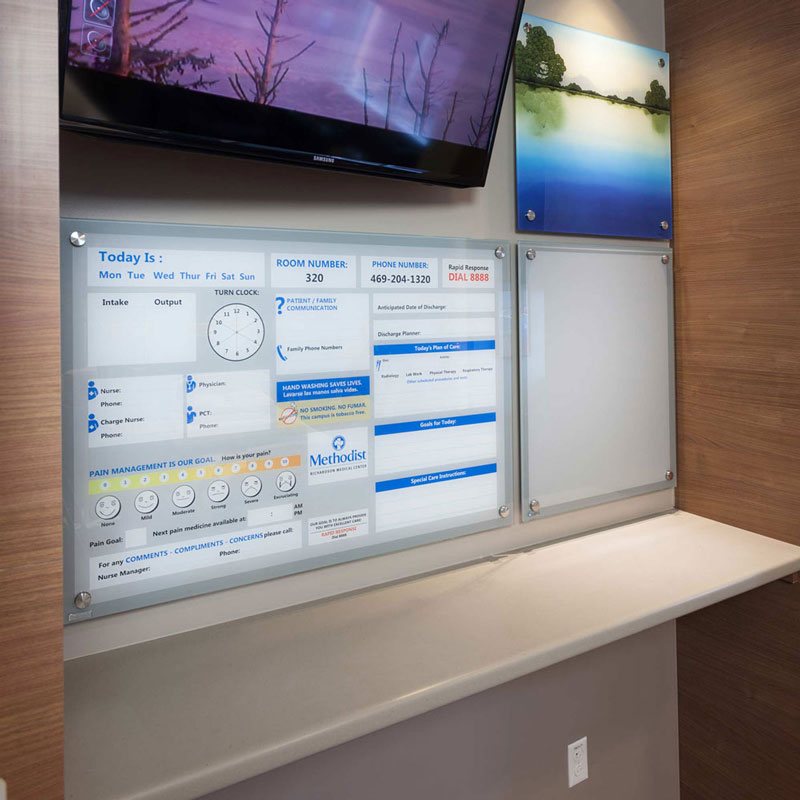
In this study, we surveyed Facility Management and Operations professionals to understand the costs associated with traditional writing surfaces, including whiteboards and ‘wall paint’. We asked them to explain how long the traditional surfaces last, what factors are most important in selecting new writing surfaces, factors leading to early replacement, time and resources for installation associated with traditional solutions and estimated expenses.
What we found was shocking
73%
73% of facility managers say whiteboards last less than four years
What we found was shocking. 73% of Facility Managers and Operations professionals said that their whiteboards last four years or less before becoming permanently discolored and damaged.
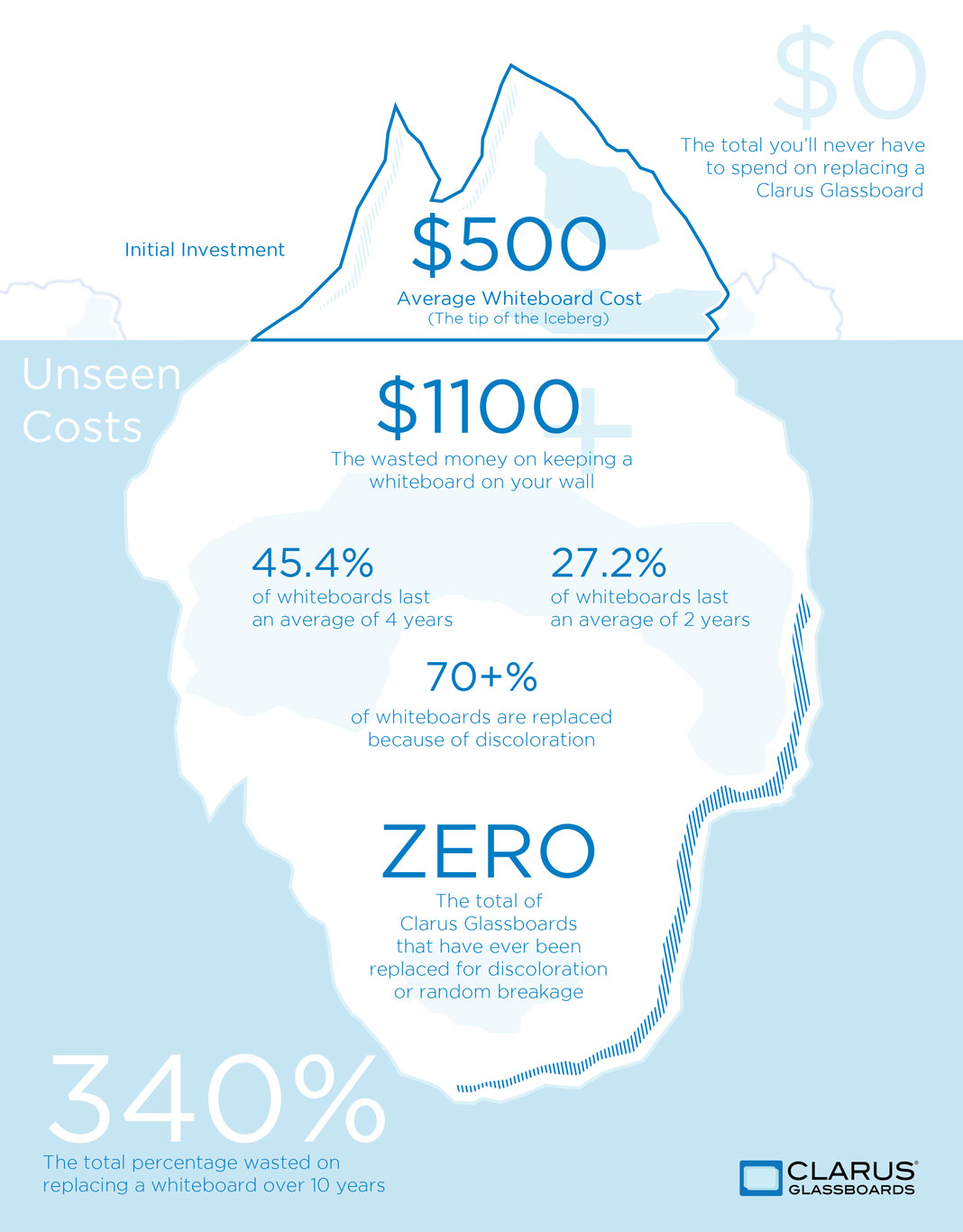
We also learned that for the average ‘whiteboard’ installation, professionals are spending $1698 over 10 years. With average corresponding product costs of no more than $500, this represents three replacements in just ten years on average – a truly remarkable waste of funds.
$1698
The average ‘whiteboard’ installation costs $1698 over 10 years.
The data proves that the lower cost price tag for low-end whiteboard (and paint) solutions come with a higher total cost of ownership. Because Clarus products do not stain, smear or ghost or break, they never need replacement. This results in big savings on replacement, installation and maintenance expenses – not to mention ROI for style points and performance.
Whiteboards kill budgeting and planning
With disposable whiteboards as a precedent, facility managers aren’t prioritizing total cost of ownership. Glassboards return ‘total cost of ownership’ to the conversation. Just one whiteboard costs over $1700 over 10 Years. If you buy a whiteboard, plan on spending 340% more on average, just to replace it.
Whiteboard buyer considerations:
- Writing Surface Quality and Erasability
- Initial Cost
- Durability
- Aesthetic and Design
- Installation
- Safety
- Total Cost of Ownership
Whiteboards are harder to install
At the median wage of $35 per hour (source: Payscale) installation can add 5% – 15% to the expense of each whiteboard. And hourly wages can more than triple depending on union, overtime, and other considerations. 54% say that it takes longer than 30 minutes to install a traditional whiteboard, and 18% say it takes longer than an hour.
Clarus cost of ownership is almost too simple
Clarus Glassboards don’t wear out. They never require replacement because they don’t stain or break – they’ll look just as good in 20 years as their first day. With facility managers spending 340% more just to replace damaged whiteboards and 0% more for Glassboards, the savings are immense. Our analysis shows that in just 48-72 months, Glassboards begin to save you money. And they’ll be there year after year after year. Disposable whiteboards are too expensive too afford. And for the first time, the data proves what Clarus customers already know: Because of poor design, damage, replacement and installation costs, cheap whiteboards cost more over just 4-6 years than Clarus Glassboards.
A Few of Our Clients








































Build a Board That Will Last
the Life of Your Space
Latest Articles